By Luke McFarlane and Jhanvi Verma
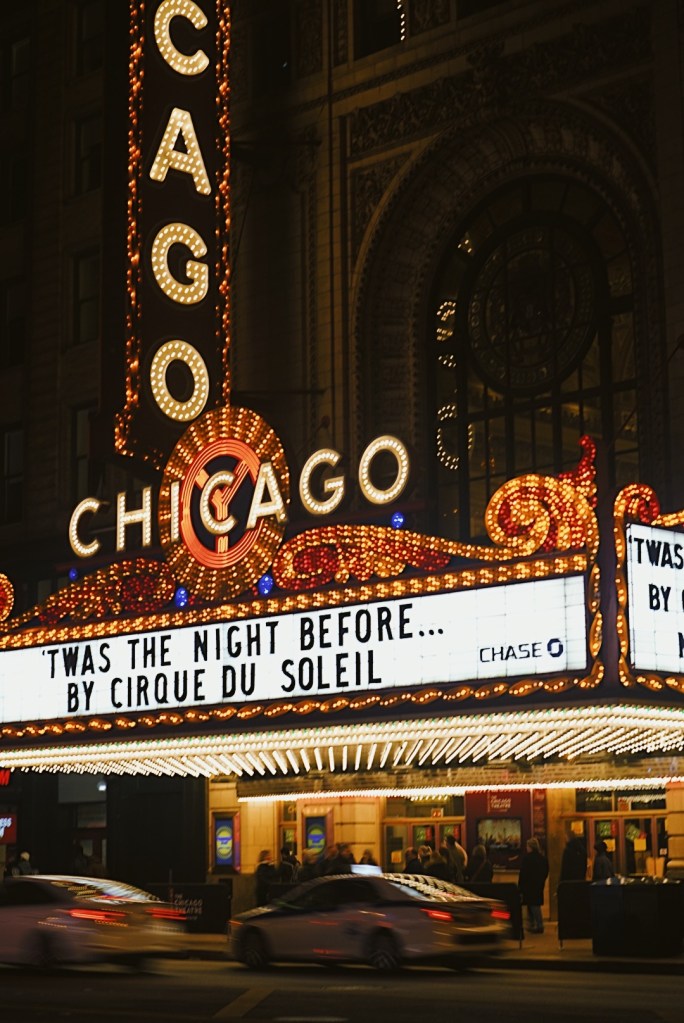
“The problem is in the continuous ‘solutions’ to segregation, like gentrification, that only perpetuates the issue instead of fixing it,” is what 21-year-old Christian Ortega had to say about his hometown of Little Village.
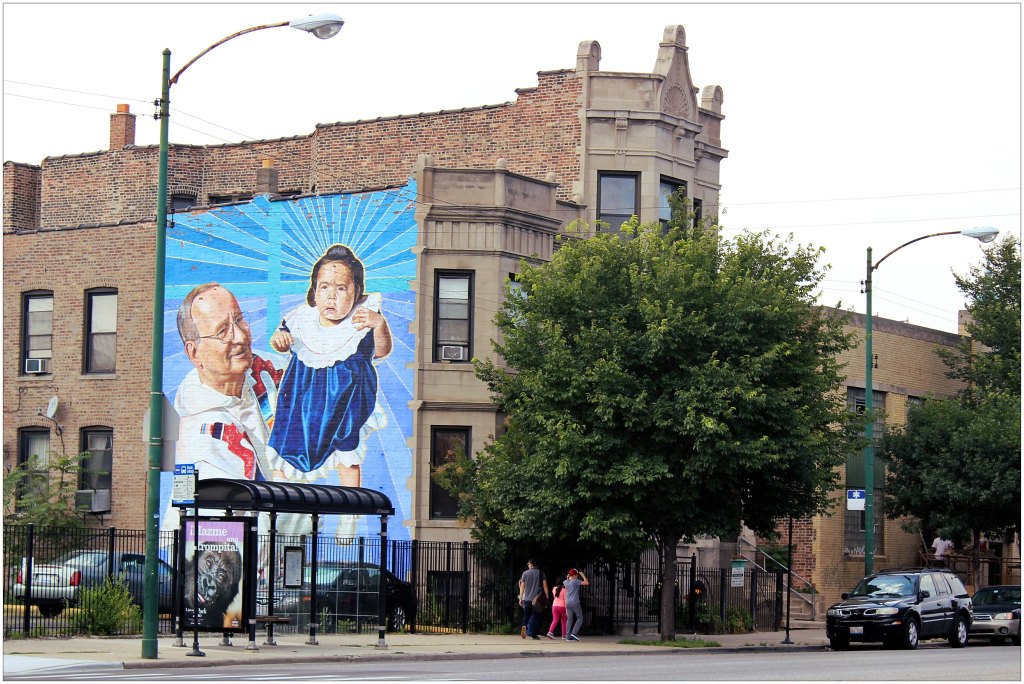
Pilsen and Little Village are Latino neighborhoods situated in the West of Chicago. They are known for their cultural food and art, which are representative of Latino culture.
According to a statistic from Crain’s Chicago Business, Pilsen is one of the areas of Chicago that has seen one of the most drastic drops in the Latino population. Amongst Pilsen was Logan Square and Avondale, two other neighborhoods that are known to be largely populated by Latinos.
“I love how rooted history and culture are within the neighborhood,” Pilsen resident Karina Blanco said.
Ortega agreed, adding that the Latino presence of Pilsen and Little Village in Chicago allows for a place where they can express themselves, and indulge in their culture while feeling like they belong; “These neighborhoods create a sense of community for people.”
Blanco added, “Since I’m Latina, I can communicate with the people well and I am familiar with the customs.”
But not everything regarding Pilsen’s rich cultural history has been positive.
“The problem is that segregation has created cultural hubs, that many of the residents now rely on in order to find work; and gentrification breaks apart those cultural bonds that the residents share, and makes it harder for the original population of minorities to live adequately.” Ortega expressed. “Chicago is known for being a gumbo of sorts. It’s a mixing pot of a bunch of different cultures, everybody has their own place where they can feel safe and where their culture is celebrated. Gentrification breaks those strongholds, but it’s the product of trying to fix segregation.”
Largely, the result of a high number of Latino’s in Pilsen is due to the ongoing issue of segregation in Chicago.
For example, Ortega talks about a place in Pilsen called “The Discount Mall.” This facility was a huge place for market vendors, all of whom were Latino.
“When this place was bought out by a company with a higher income, these vendors who were known and liked by those in this neighborhood were forced to move out, and were replaced by big-name businesses, namely owned by Caucasians,” Ortega explained.
As a direct result of past racism and separation of people based on ethnicities, many minorities in Chicago are now living in underdeveloped neighborhoods where they do not have access to sufficient education which leads to an increase in criminal activities among neighborhoods with low socioeconomic class
Map: Chicago’s Income from North to South
Calling it a “linear city,” Blanco said that the north parts of Chicago consist of higher-income residents, with more luxury apartments; the further you descend into the south and west sides, it becomes more minority driven and social class begins to waver among residents and neighborhoods.
When asked if Chicago should have segregated parts of the city, Blanco said, “I feel in an urban city, it is bound to happen. We have a lot of immigrants in the United States, so being surrounded by people from your culture who share your beliefs and customs as you, it is home. People naturally gravitate towards something familiar to them. It should not strictly be segregated like that, but it tends to be that case. Gentrification is bad when it’s forced.”
The force of gentrification is where people who belong to lower socioeconomic classes like Blanco and Ortega feel the pressure.
“Even if they aren’t trying to be, when the majority comes in and takes over a place that was once a cultural hotspot for minorities, it can feel invasive, and that’s when it’s a problem. Gentrification, a negative thing, is the result of an attempted solution to segregation, another negative thing.” Ortega said.
Dr. John Betancur, a professor in the Urban Planning and Policy department at the University of Illinois at Chicago, said that much of the recurrent segregation issues stem from some practices still in place in the real estate market.
“In the 30’s, housing rules made it so white people could only pass on housing to white people, and not minorities,” Betancur said. “The Fair Housing Act of 1968 banned discrimination in the [housing] market, but real estate businesses continue to practice segregation; sending minorities to neighborhoods that are minority driven, and white people to predominantly white neighborhoods.”
Chicago is known to be associated with large amounts of violence and criminal activities, no matter what the external circumstance, especially in the west and south sides.
According to a report by the Sun-Times, “Amid a statewide stay-at-home order, Chicago saw the most violent five-day span of the year earlier this week, with 60 people shot between Sunday [April 5, 2020] and Thursday [April 9, 2020].”
When Blanco was asked why that’s the case, she said, “when you build a community without libraries, grocery stores, healthy food options, and access to substantial education. People don’t know any better, they lack accessibility and quality care. I think it’s more of a government issue.”
The effects of segregation and gentrification have an almost direct correlation with the cause of violence in many of these neighborhoods. According to an article by WGN, it comes back to the 1960s, when the city “poured money” into Downtown Chicago, rather than into minority driven communities. This led to a huge drop in the quality of schools in the south and west sides of the cities. In these understaffed schools, kids never learn to respect authority, which draws parallels to police as they age. These same kids grow up with very few economic opportunities in their areas, leading them to turn to drugs, alcohol, and violence.
GIF: Crimes Reported from 2001-2020 (Data collected from Chicago Data Portal)
When asked about their overall opinions on segregation and gentrification, Christian Ortega’s opinions were mixed.
“The terms imply something bad, but that doesn’t mean that the outcome hasn’t created good things,” he said. “Segregation has created close communities. Gentrification has given places that were once food deserts a plethora of grocery stores and markets.”
The issue seems to be, however, that gentrification doesn’t solve problems, it merely moves them somewhere else. For example, a study at the University of Chicago suggests that the food deserts don’t disappear, they just relocate, creating a new area of lower-income, while the original home of those people is overcome with people who can afford the new amenities.
“Those people who can’t keep up with the price of living going up are forced out of their cultural community and have to find another low-income space to live, ” says Ortega.
“When the standard of living suddenly increases, prices of services, foods, and other things can skyrocket. Then you have an unprepared population of minorities mixing with the new people who have come in, who are able to afford those things, and there’s this huge imbalance that can’t really coexist together, at an economic level.”
Something equally as significant as education to minorities is education to the majority. Why should white Americans learn about gentrification?
“It’s important to preserve the culture,” Ortega said. “It’s one thing to come somewhere because it’s cheaper; but there should be a certain level of respect because it can be invasive, even if you don’t know it is. Things can be taken away from peoples’ culture simply by majorities coming in and taking over. Especially by the ratio of majorities and minorities changing.”
But what about the future? The past has created the circumstances that Chicagoans live in today, so what will today do to the future?
Dr. Betancur continued and said, “If I am allowed to dream, I would say that one day converts, as in religion, and decides not to sin anymore; which means that they erase sentiments they have with being neighbors with other races.”
We would need to reverse a hundred years of history in some sort of miracle to fix the current issue of segregation and gentrification.
 Luke McFarlane Digital Journalism